First World War literature and media: books, films and sources worth knowing
More has been written about this war than anyone can read. The useful filter is not the subject but the genre – and the year of publication.

Writing about the First World War has never stopped since 1918, and the waves are easy to identify. The memoir literature of the 1920s fought over the meaning of the war. The Fischer controversy of the 1960s reopened the question of German war aims and responsibility. The turn to experience from the 1980s shifted attention from operations and cabinets to everyday life, gender, captivity and grief. The centenary wave around 2014 made it a global war again, with theatres in Africa, the Middle East and the Pacific and millions of participants from the colonies.
For choosing what to read, this matters more than it sounds. A book’s date of publication tells you almost as much about it as its subject.
A second point concerns numbers. Casualty figures for this war differ by millions between accounts, and rarely because of poor research. They differ because of definition: whether deaths from wounds are counted, whether the 1918 influenza pandemic is included, whether the successor conflicts up to 1923 belong. Serious accounts say what their figure contains.
Which genre answers which question
Why the war happened – a general history with weight on the pre-war years and the July crisis. Personal testimony does not help here: those at the front knew no more about the causes than a reader does today.
What the war felt like – letters, diaries, memoirs, read with their filters in mind: censorship, consideration for the family at home, and, in memoirs, the later knowledge of how it ended.
How the war was interpreted – fiction and film, read with attention to the year they were made. A novel of 1929 is a source for 1929.
A particular person – not literature at all, but registers: casualty lists, muster rolls, grave records. The German section sets out the order in which to use them.
Listed titles
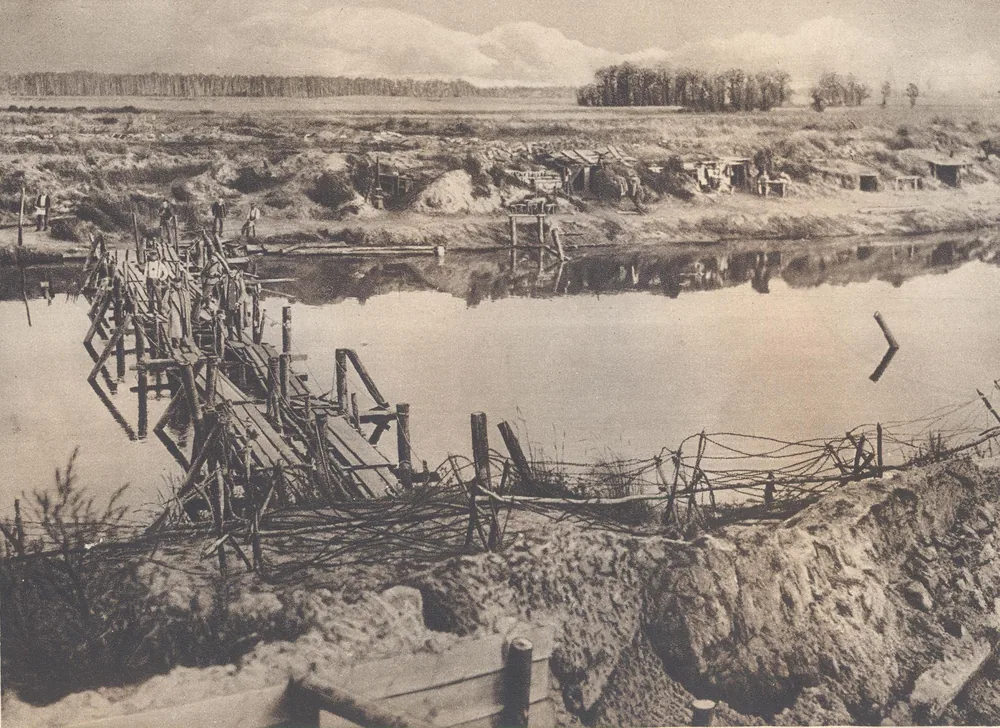
One widespread misconception is worth naming. The First World War is popularly the war of the trenches in Flanders and northern France – an image that comes almost entirely from western literature and film. The Eastern Front, the Balkans, the Caucasus, Mesopotamia, Palestine, East Africa and the Pacific were fought under completely different conditions: mobile, across vast distances, with hunger and disease as the main causes of loss. Reaching that part of the war requires looking for it deliberately.
For libraries and school collections building a basic holding, a lean mix does most of the work: one recent general history, one reference work, two or three edited collections of personal testimony, one novel from the interwar years and one collection of visual sources. That covers the majority of questions that actually arise in teaching and project work.
Frequently asked questions
Which single book should I read?
If it has to be one, a recent general history that combines military, social and global perspectives. If two are possible, add an edited collection of letters or a diary: the general history supplies the framework, the testimony the experience, and they correct one another.
Is “All Quiet on the Western Front” a historical source?
For the war, only in part; for its interpretation, very much so. Remarque published it in 1929, eleven years after the war ended, and wrote it into the political conflicts of the Weimar Republic. As literary reckoning it is central; as evidence for the detail of front-line life it needs care.
How many people died in the First World War?
Roughly 9 to 10 million soldiers, and a comparable order of magnitude of civilians. Figures vary because definitions vary. For several theatres, particularly in the Ottoman Empire and eastern Europe, no reliable registers exist at all.
Where can I find digitised sources?
Europeana 1914–1918 for personal testimony and objects, 1914-1918-online for peer-reviewed encyclopaedia articles, and the portals of the national archives for original records. The Imperial War Museums hold the largest collection of veteran sound recordings.